蓝鲸是最大的海洋生物英语
The blue whale is the largest marine creature on Earth, a true titan of the ocean that captures the imagination of people around the world. Measuring up to 100 feet in length and weighing as much as 200 tons, these magnificent mammals dwarf almost every other living being in the sea. Their size is not just a matter of physical magnitude; it represents a remarkable feat of evolution and adaptation.
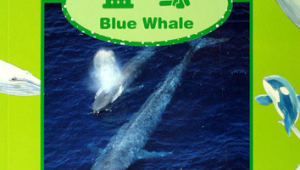
The blue whale's colossal body is a masterpiece of nature's engineering. Its streamlined shape allows it to glide through the water with astonishing efficiency, despite its massive bulk. The long, tapered body is designed to minimize drag, enabling the whale to swim at speeds of up to 20 miles per hour when necessary. Its large, powerful flippers and a strong, muscular tail provide the necessary propulsion for movement, while the unique baleen plates in its mouth are a specialized feeding adaptation.
These baleen plates act as a filter-feeding mechanism. As the blue whale swims through the water with its mouth wide open, it takes in large volumes of water filled with tiny shrimp-like creatures called krill. When it closes its mouth, the water is forced out through the baleen plates, which trap the krill inside. This highly efficient feeding strategy allows the blue whale to consume up to four tons of krill per day, a staggering amount of food that is essential to sustain its enormous body.
Blue whales have a complex social and behavioral pattern. They are known to migrate over vast distances, traveling from the cold, nutrient - rich polar waters where they feed in the summer to the warmer, tropical waters where they breed in the winter. These migrations can span thousands of miles and are a testament to the whale's endurance and navigational abilities.
During the breeding season, male blue whales engage in elaborate courtship displays to attract females. These displays may involve vocalizations, physical posturing, and even gentle nudging. Once a pair has mated, the female will carry the calf for about 10 - 12 months. After birth, the calf is already a massive creature, measuring around 25 feet in length and weighing several tons. The mother provides her calf with rich, fatty milk, which allows the calf to grow at an astonishing rate, gaining up to 200 pounds per day.
The blue whale's vocalizations are also a fascinating aspect of its biology. They produce a series of low - frequency sounds that can travel for hundreds of miles through the ocean. These sounds are used for communication, navigation, and possibly for locating food. Scientists believe that the blue whale's calls may be one of the loudest and most complex forms of communication in the animal kingdom.
However, the blue whale has faced numerous threats over the years. In the past, commercial whaling was the most significant threat. From the 19th to the mid - 20th century, blue whales were hunted almost to extinction. Their large size made them a prime target for whalers, who sought their bluer, which was used for oil, and their meat. By the 1960s, the blue whale population had been decimated, and it was on the verge of disappearing forever.
Today, although commercial whaling has been largely banned, blue whales still face other challenges. Pollution, including plastic debris and chemical contaminants in the ocean, can have a detrimental effect on their health. Entanglement in fishing gear is also a major problem, as it can cause injuries and even death. Climate change is another significant threat. Rising sea temperatures can disrupt the food chain, reducing the availability of krill, which is the blue whale's main food source.
Conservation efforts are underway to protect the blue whale. International agreements have been put in place to ban whaling and to establish marine protected areas where blue whales can feed, breed, and migrate safely. Scientists are also conducting research to better understand the blue whale's behavior, biology, and the threats it faces. By working together, we can ensure that these magnificent creatures continue to thrive in our oceans for generations to come.
In conclusion, the blue whale's status as the largest marine creature is not only a matter of size but also a symbol of the ocean's biodiversity and the wonders of nature. Its survival is crucial for the health and balance of the marine ecosystem. We have a responsibility to protect these gentle giants and to preserve the oceans they call home. Through continued research, conservation efforts, and public awareness, we can hope to see the blue whale population recover and continue to be a part of our natural world.